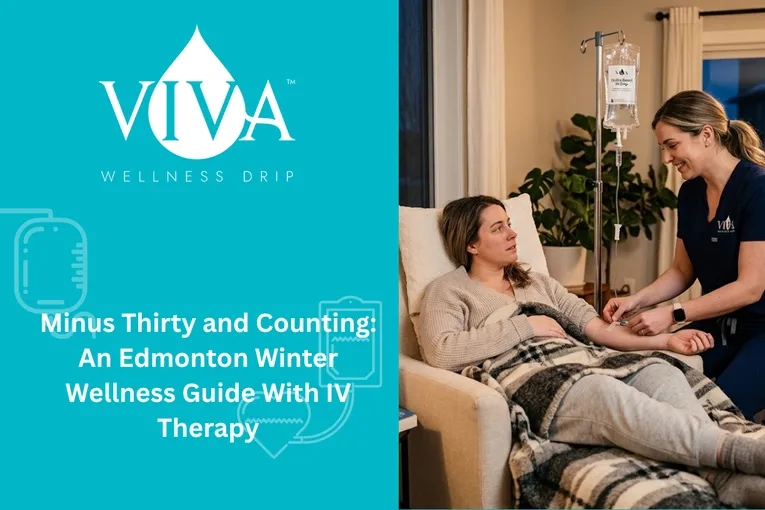
Edmonton winter is not a season you get through so much as one you live in. From the first lasting snow in November to the last stubborn drifts in April, the city runs on block heaters, remote starts, layered clothing and a kind of stoic good humour. It is also five months in which the body is under quiet, constant pressure: dry air, little daylight, cold-and-flu season, less movement and more comfort food. This guide gathers the practical habits that make an Edmonton winter easier and explains where mobile IV therapy from Viva Wellness Drip Edmonton fits among them.
What Winter Does to the Body
The climate records from Environment and Climate Change Canada make the picture clear: Edmonton’s winter months bring average daily temperatures well below freezing, frequent cold snaps toward minus 30, and some of the shortest daylight of any major Canadian city. Heating that cold outdoor air drives indoor humidity down to desert levels. The body loses moisture with every breath, thirst is suppressed by cold, and the Mayo Clinic lists fatigue, headache and poor concentration among the signs of the mild dehydration that results. Add reduced vitamin D from lack of sun, more time indoors with other people’s viruses and less exercise, and the winter slump is not imaginary.
The Habits That Matter Most
- Humidify. A humidifier in the bedroom, set to 30 to 40 percent, does more for skin, airways and sleep than almost anything else.
- Drink anyway. Keep a bottle at your desk and in the car. Cold suppresses thirst; drink on a schedule.
- Chase daylight. A lunchtime walk at minus twenty still delivers light. Consider a light-therapy lamp for the darkest weeks.
- Keep moving. Indoor options are everywhere: the river valley trails, the Kinsmen Sports Centre, community rec centres, skating at Victoria Park and the Legislature grounds.
- Get the flu shot. It remains the most effective protection against influenza.
- Eat for the season. Soups, stews, root vegetables and the frozen fruit your summer self stocked up on.
- Protect sleep. The dark months are a chance to sleep more, not less.
Where IV Therapy Fits
Mobile IV therapy is a periodic support, not a daily habit. In winter, Edmonton clients use it in a few predictable ways:
- Hydration or Hydro Boost when the dry air has left them flat, headachy and tired.
- Immune Boost or Super Immune Boost at the start of the season, before holiday travel and after a cold.
- Vitamin D shots as a quick top-up through the sunless months.
- Beauty drips and glutathione shots for skin that cracks and dulls in the dry air.
- Energy Boost in the February slump, when the novelty of winter has long gone and spring feels theoretical.
- NAD+ for clients looking for a deeper reset during the long dark stretch.
The appeal in winter is practical: a registered nurse comes to your home, so there is no scraping the windshield, no icy drive across the city and no waiting room. The full menu of drips and vitamin shots is online.
A Month-by-Month Rhythm
November: start the humidifier, book the flu shot, consider an Immune Boost before the season begins. December: hydration and immune support around holiday travel and parties. January: Vitamin D and Energy Boost as the dark deepens. February: the hardest month; Beauty, Hydration and NAD+ bookings rise. March: Immune Boost as the last colds circulate and daylight returns. This is a pattern, not a prescription; your naturopath can tailor it.
How It Works
First-time clients complete a 10-minute virtual naturopath consultation, renewed annually. After that, you book online, the nurse arrives, completes a short assessment, places the IV and administers the infusion over 30 to 45 minutes. Shots take a few minutes. Groups and households can be treated together.
Snowbirds and Winter Travel
Many Edmontonians escape for part of the winter, to Mexico, Arizona or Hawaii, and return to find the cold waiting. The transition back, from humid warmth to minus twenty and furnace air, is a shock to skin and airways, and long flights add dehydration and jet lag. A Hydration or Immune Boost drip in the first days home is a common booking, as is a Vitamin D shot for those who did not get as much sun as they hoped.
Safety
Every infusion is administered by a registered nurse, with oversight from a Medical Director. The consultation screens for any reason IV therapy may not be appropriate. IV therapy supports wellness and does not treat illness; persistent low mood through winter should be discussed with a physician, as seasonal affective disorder is real and treatable.
Edmontonians are winter experts. With the right habits and a little support, the long season becomes manageable, even enjoyable. Viva Wellness Drip also offers franchise opportunities for entrepreneurs who want to bring mobile IV therapy to winter cities of their own.
Frequently Asked Questions
Why does Edmonton’s winter dehydrate me when I’m not sweating?
Heated indoor air is extremely dry and pulls moisture from skin and airways with every breath, while cold suppresses thirst.
Which drip is best for the February slump?
Energy Boost and Hydration are the most common choices, often with a Vitamin D shot.
Does the nurse still come in a cold snap?
Yes. Mobile service operates through winter; appointments may be adjusted only if roads are genuinely unsafe.
How often should I book IV therapy in winter?
Many clients book monthly from November to March, or around key moments such as travel and illness. Your naturopath can advise.
Does IV therapy help with winter low mood?
It supports hydration and nutrients, which can help you feel better physically, but persistent low mood should be discussed with a physician.